
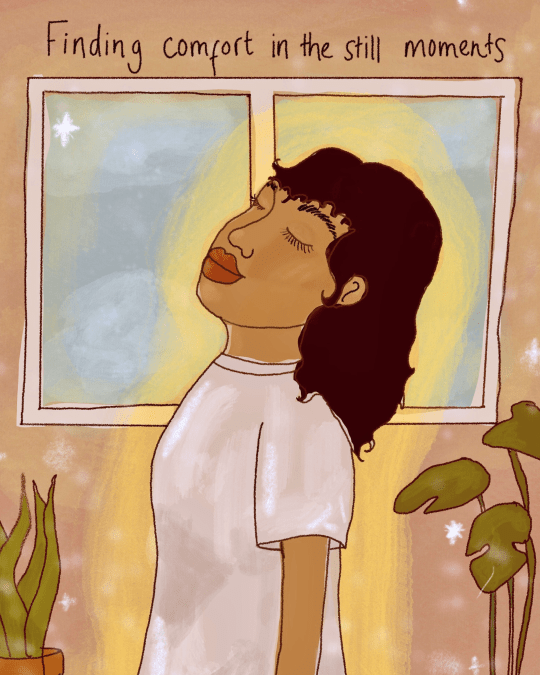
“What are you up to tonight?”
“Nothing, really.”
It’s a Tuesday. I’ve been working from home all day, managing a half-hour stroll over my lunchbreak. After work I’ll go to the gym with a podcast, sit with my thoughts for a while, write, read, Facetime my boyfriend, cook something fresh – before calling it a night. What a delicious day.
I’m in my 26th year and seem to be having a social hiatus. If you’d have told me this a year ago, I would have said with utter sincerity send fucking help. Back then, being planless for a few days would have unnerved me. My treadmill lifestyle, unsustainable as it was, felt like the only acceptable option. I never could have imagined spending hours on a Saturday bed-wedded, book in hand, tea and biscuits poised for a tender guzzling on the bedside table. And yet.
Something has shifted; perhaps it’s age; perhaps social fatigue (London living does the job!); perhaps it’s the lethargy that working full time inspires; perhaps I’ve just accumulated enough life experiences to learn from them, instead of compulsively seeking them.
Of course, maintaining time outdoors, a social life and hobbies are imperative pillars of health, but these activities are becoming increasingly difficult to earnestly indulge in without time to recharge. I now see my previous fear of time alone as having been a symptom of woeful self-disconnect. I’d like to learn about this self-disconnect – where it comes from, where it leads, and who it benefits. So that’s what I’ll attempt in this blog.
Or, perhaps a more apt foreward: what’s in a “nothing, really”?
The Fear
I spent much of my life dreading any time on my own if it wasn’t intentional. For example, taking myself on adventures around the world was a measured aloneness, one that I planned and relished. But upon becoming acquainted with our fickle friend the 9-5, having an empty evening in felt like failure and rejection. Time alone seemed like penance for being dislikeable.
From birth, the human knows that it needs company for survival. You can observe a marked lack of parental attention and affection in childhood playing out decades later in our adult attachment styles. We self-construct into societies and co-operatives instinctively. We rely primitively on one another’s skills, protection and care not only to make our existence bearable, but also possible. Craving company is a natural offset of this drive.
This is a start in understanding our need for company and activity. But when I more profoundly examine my anxiety around aloneness, I realise that what I once interpreted as a restless sociability when confronted with quiet time alone was really a knee-jerk response to past isolation: school bullying, time sat alone in the common room without company, weeks at home whilst my friends danced together at parties that I wasn’t invited to. You get the picture; all manner of childhood horrors entailing outright peer rejection. And the imprint of the stress from this social stratification continued to puppeteer my nervous system: I was responding to any un-social evening with the same fogging of anxiety that had struck me years before.
It’s an unsurprising psycho-physical reaction: our formative years configure how our mind and body respond to situations that mirror these childhood ills. You see this anxiety at play very prominently in London; everyone who has moved to the capital for the first time is likely to have been taken aback by the city’s superficiality and competitiveness. ‘Friends’ adore informing you that they have other people that they could be hanging out with, or that you’ve caught them on their only free day. They themselves, of course, are compelled to state this rather tasteless disclaimer due to their own fear of vulnerability. The city has a nasty way of tinging once authentic relationships with an icy defensiveness, inflaming FOMO and shame. In this way, friends pass on their fear of rejection – a contagion of ignorance – adding kindling to our fear of the solitary.
So there are both primitive and conditioned drives that may underly our repulsion of time spent alone in relative stillness. But what of the world that dictates how we might acceptably behave – doesn’t it, too, have a role to play?
The World
In a different time, we might have been more honestly taught the benefits of solitude: after all, many renowned figures throughout history have touted the perks of embracing it. Lots of the great religious prophets and leaders spent years alone.
“Apply yourself to solitude. One who does so will see things as they are” was Buddha’s humbling contribution to the debate. Which raises the question – are we witnessing a culturally cultivated aversion to seeing things as they are?
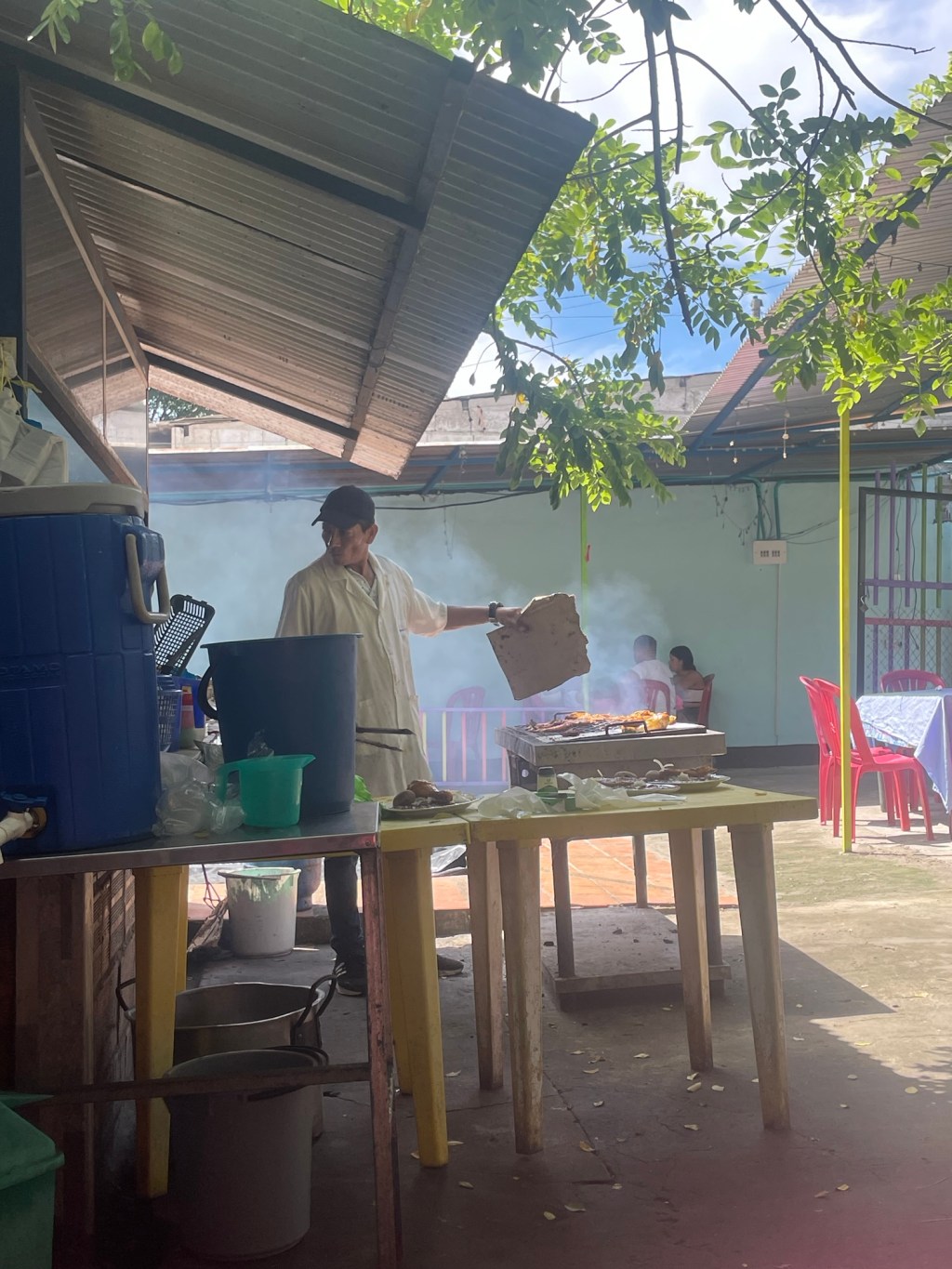
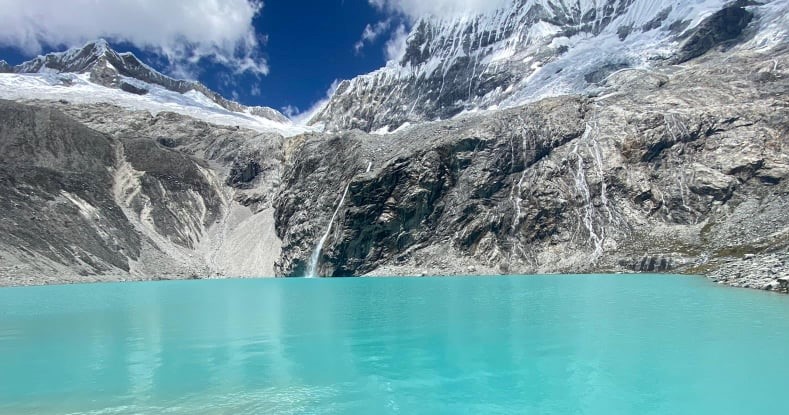
Let’s unpack that. For many, simply living is sufficient for contentedness. I see this often on travels; I tour the world in search of new feelings and sights, during which time I encounter those who have happily remained in isolated communities for generations. Their life is quiet, relatively monotonous, purposeful. Contented[1]. And yet, in the West, many of us snatch away from time spent quietly and ‘unremarkably’. We have been given too many keys to too many doors; we are lost in a parasitic labyrinth of our own creation that strangles our inner sense of quiet.
Why are there only dwindling avenues through which to learn to access and nurture our internal worlds (since we seem overwhelmingly to have unlearned this process)? We must lay a hefty chunk of the blame on systems and surroundings. We’re programmed to repel stillness, trained instead to persistently invest in and engage with distractions. This results in widespread inclination to busyness, and a swollen aversion to sitting with ourselves. As Maté writes, “awareness of the moment has become something to fear. Late-stage capitalism is expert in catering to the sense of present-moment dread – in fact, much of its success depends on the chasm between us and the present, our greatest gift, getting ever wider, the false products and artificial distractions of consumer culture designed to fill the gap.”
Within our socioeconomic context, our purpose is to consume. Inherent to consumption is distraction, and a focus on what we lack in the moment. By adhering to this, our minds are conditioned to turn away from being softly with our present reality. After all, stillness is the enemy of consumption.
For example, watching reels on our own is a process designed to simulate authentic ‘alone time’, when it really detaches us from ourselves, cultivating a treacherous and very addictive avoidance. Through short video clips, we are sold products, ideas and stimulation in place of mindful self-nourishment. No wonder society instils the sense that time alone is wasteful and unproductive – if such serenity were promoted, it would erode eons of hours that could be filled with consuming, fuelling economic growth.
Likewise, we have been condemned with an unnatural awareness of everyone else’s activities all at once. From my perspective, time spent alone on social media is a vicarious way of seeking connection with others. The trap of social media lies in the manipulation of this very human magnetism to others in a world that muddies authenticity; a red herring luring us towards a trace of the real intimacy that neoliberalism gleefully erodes. Ironically, too much social media has the consequence of disconnection. In ‘connecting’ with faux-people, we become faux-people. How to spend time with ourselves when the version of us that we feel will be accepted becomes ever more refined, more projected, and further from who we are? How much shame collects as a response, a plaque sliming over vulnerable selves until we cannot bear to look our own souls in the eye? Ouch.
Even time alone can be bought. We can save up for retreats and holidays and meditation apps. Rarely does it occur to us to derive satisfaction from simply sitting with what we have.
If our inability to be restfully with ourselves is actively perpetuated by prevailing socioeconomic systems, then we must conclude that the ability to relish internal stillness is very threatening to those systems. Really, stillness is a kind of rebellion.
The Change:
Increased time alone has left me with ample hours to read. Recently, I read the autobiography of the late poet Benjamin Zephaniah. Following a turbulent childhood in Birmingham and a vibrant London-based adulthood spent performing, travelling, and campaigning, he decided to split his time between rural China and a small village in Lincolnshire.
He was fascinated by the world, its people, its hopes, its struggles. I find it compelling that having accumulated such international and dynamic lessons, after years based in our sprawling capital, his wisdom gave colour to the desire for simplicity. He details his burgeoning passion for gardening, meditation and martial arts in what prevailed to be the latter years of his life.
Something about reading this felt resonant. Whilst the external world is beautiful and vast, beauty and vastness live within us too.

I try to carry a sense of peace into quieter days. When they unfold, I navigate them mindfully. I exercise a few times a week, noting the acid that needles through muscle during hardier workouts: the process defogs, giving space for more tender and honest self-relation. I seek 10-minute intervals to sit upright, eyes closed, cultivating awareness of breath and body. I cook a lot, registering the muffled thump as mushrooms meet metal, the deep beetroot pigment that vines my palm after chopping; the tang of mustard seeds as they sizzle their sinew into oil, to sauce, to tongue. I read, I read, I read. I push myself, more often, to write.
I fall affectionately into my most precious “nothing, really”. My divine rebellion.
Further reading:
- The Myth of Normal: Trauma, Illness, and Healing in a Toxic Culture by Gabor Maté . An amazing book about the association between trauma and physical health. I think about what I learned from it everyday.
- The Life and Rhymes of Benjamin Zephaniah by Benjamin Zephaniah. A really interesting read. Definitely undertones of misogyny and humble bragging in there but overall I really enjoyed; it also walked me through some areas of modern history in a creative and informative way.
[1] Watch ‘Live to 100’ on Netflix for more about this – fascinating!
The illustrations in this blog were all by my fabulous housemate Zekia! You can see more of her artwork on her Insta page here: @stay_evolved
 a-step-aside.com
Leave a comment